← All projects

Aero Optimisation Pipeline

Automation CFD Bayesian Optimisation Python HPC

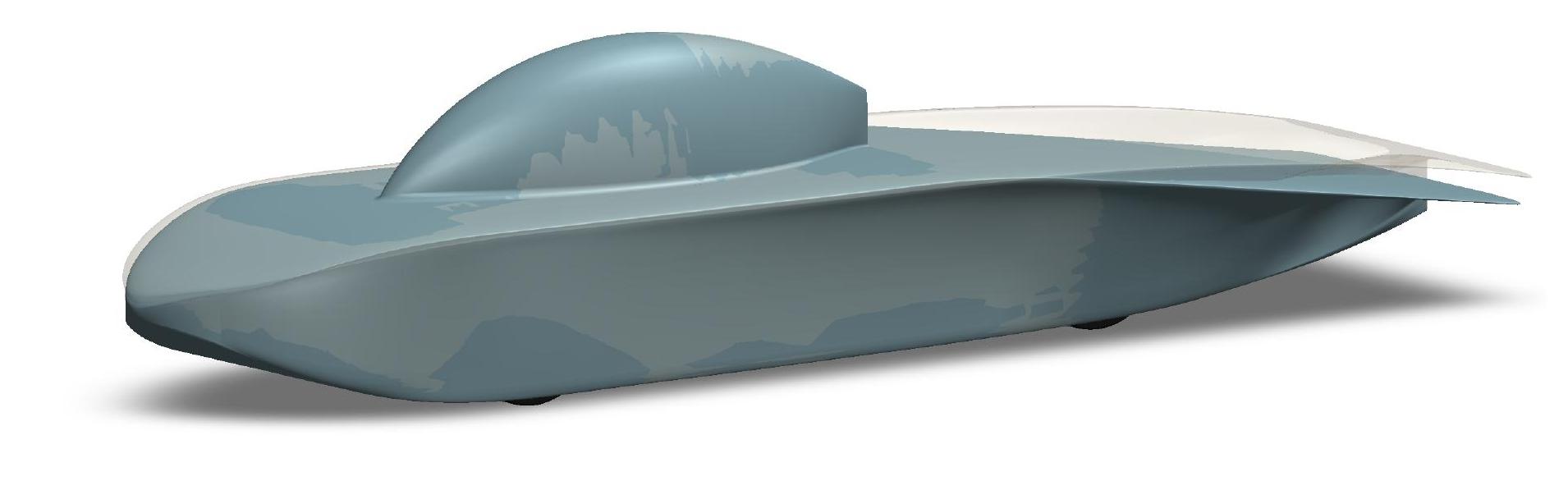
An automated pipeline that utilises parametric CAD and automated CFD execution for Bayesian optimisation. This project represents my 3rd year dissertation with a focus on exploring the aerodynamic design space around a solar racecar.

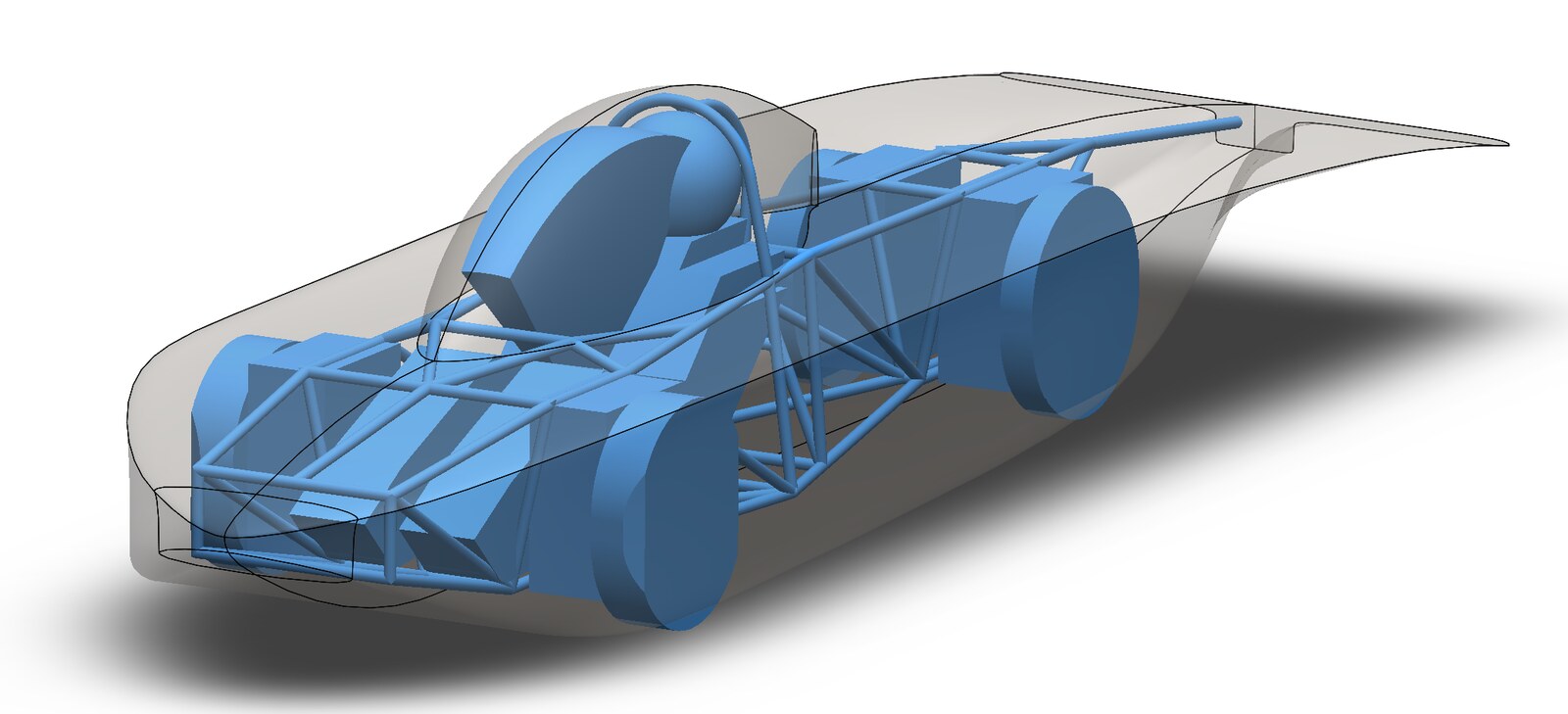
CAD render of the vehicle chassis inside the transparent aeroshell surface

Overview

This dissertation supported my team, EKKO Solar Racing at the University of Southampton, which aims to compete in the Bridgestone World Solar Challenge. The project focused on mission energy used in a day of racing as a net energy accounting for solar input, aerodynamic drag, rolling resistance, and auxiliary loads.

This project developed a closed-loop aerodynamic optimisation pipeline to explore the trade-off between drag, solar panel area and vehicle stability, using the EKKO team's design as the baseline.

What I Did

The pipeline automated the full design loop including CAD regeneration, HPC communication, CFD execution, post-processing, and candidate selection without manual intervention. The key steps were:

Final computational mesh with prism-layer inflation and wake refinement
  • Constructed a parametric SolidWorks model and half-car STAR-CCM+ RANS simulation at 23 m/s, incorporating moving ground, rotating wheels, and a near-wall resolution of y⁺ < 1.
  • Verified the CFD setup through mesh and domain sensitivity studies.
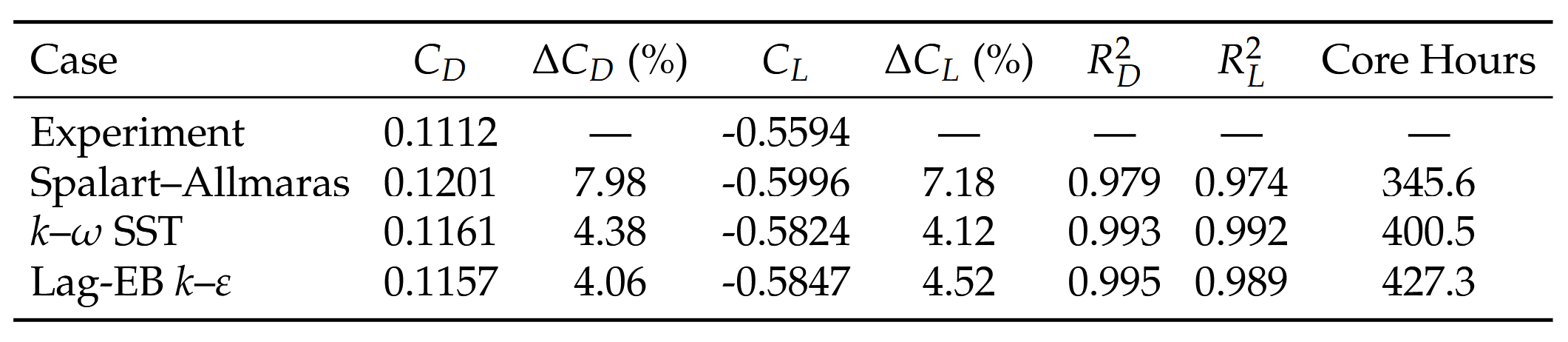
  • Benchmarked turbulence models against wind-tunnel data, with k–ω SST providing the best balance of accuracy and computational cost.
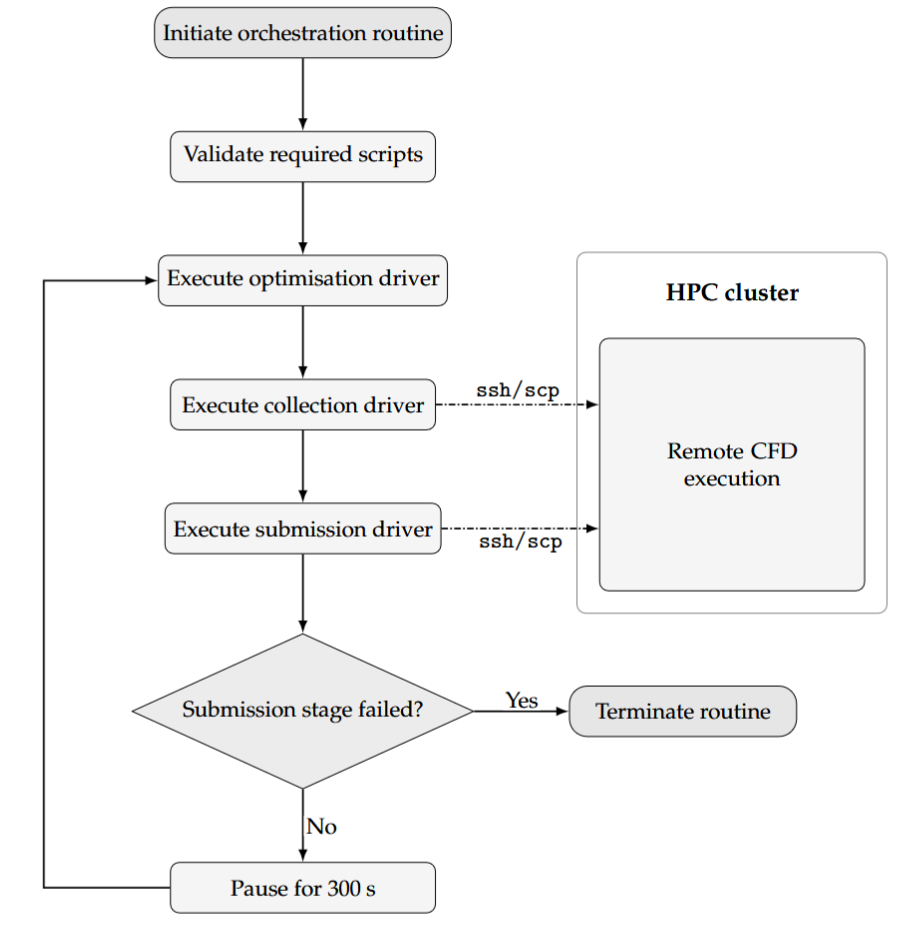
Automated orchestration loop linking optimisation, collection, and submission drivers to the HPC cluster
  • Developed a Python orchestration system linking the optimisation workflow to the Iridis 6 HPC cluster, allowing simulations to run, pause and resume autonomously.
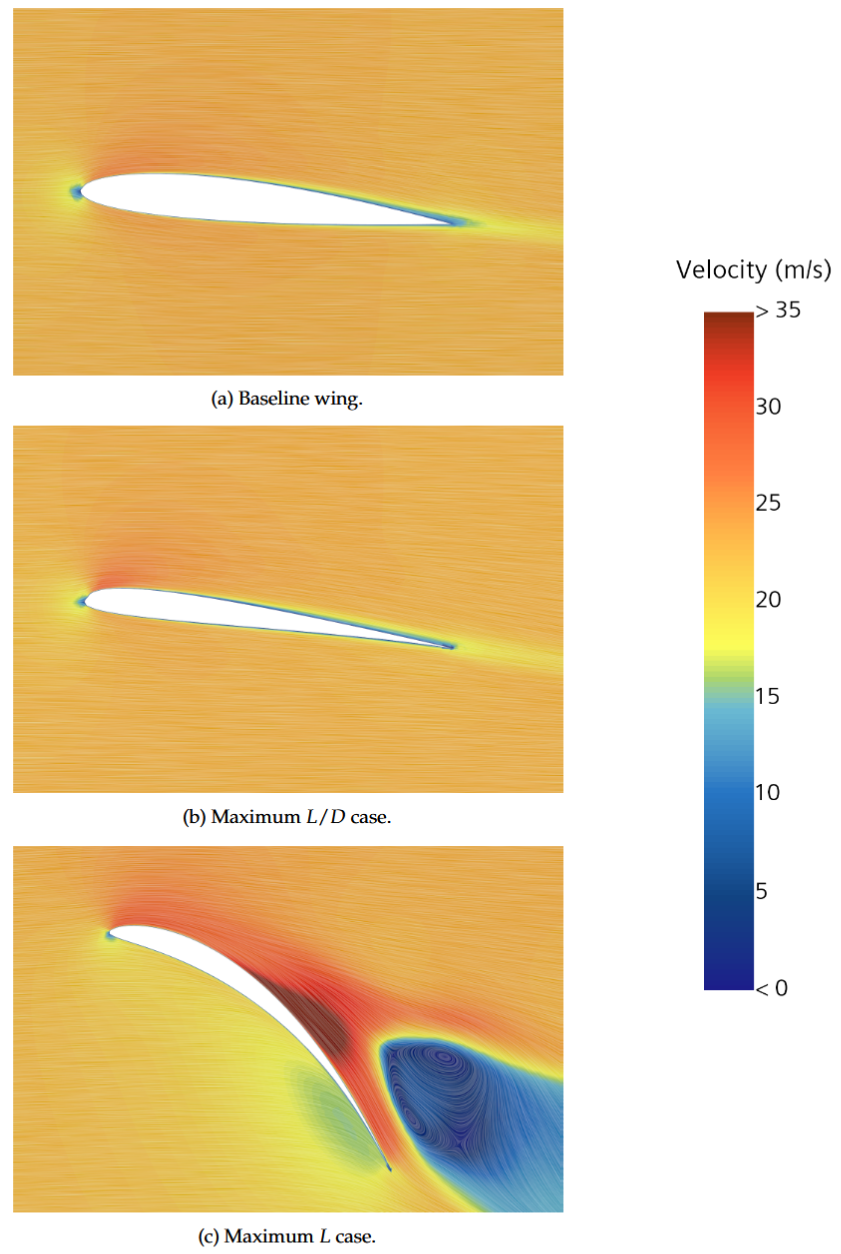
  • Validated the pipeline using a Pareto front study on a wing.
  • Implemented pitch-constrained Bayesian optimisation using Meta’s Ax platform, optimising mission energy from drag, solar area and rolling resistance.
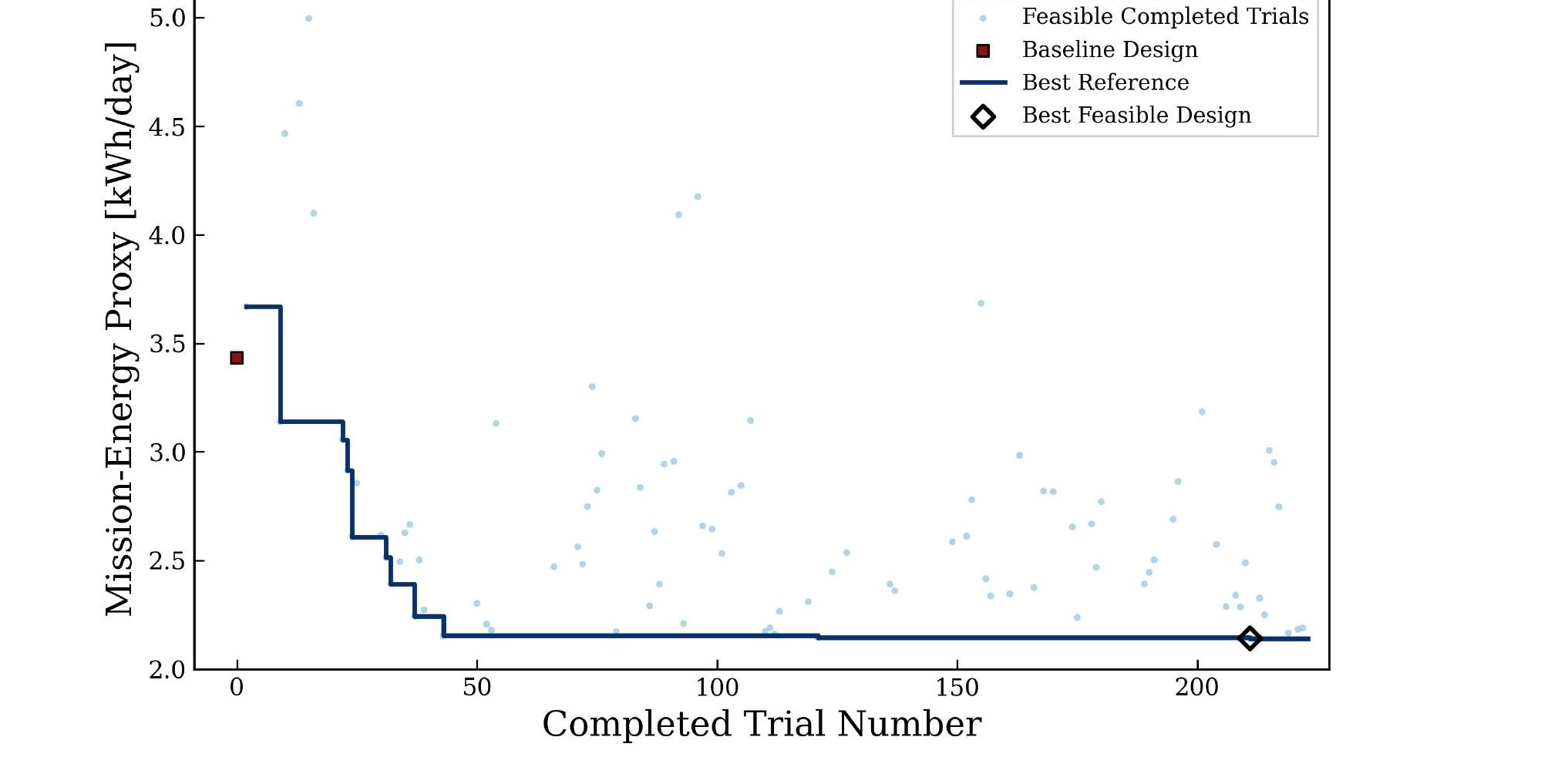
Best feasible mission-energy proxy versus completed trial number
  • Completed 221 of 250 trials. The best design reduced predicted daily battery energy consumption by 37.6%

Results & Reflections

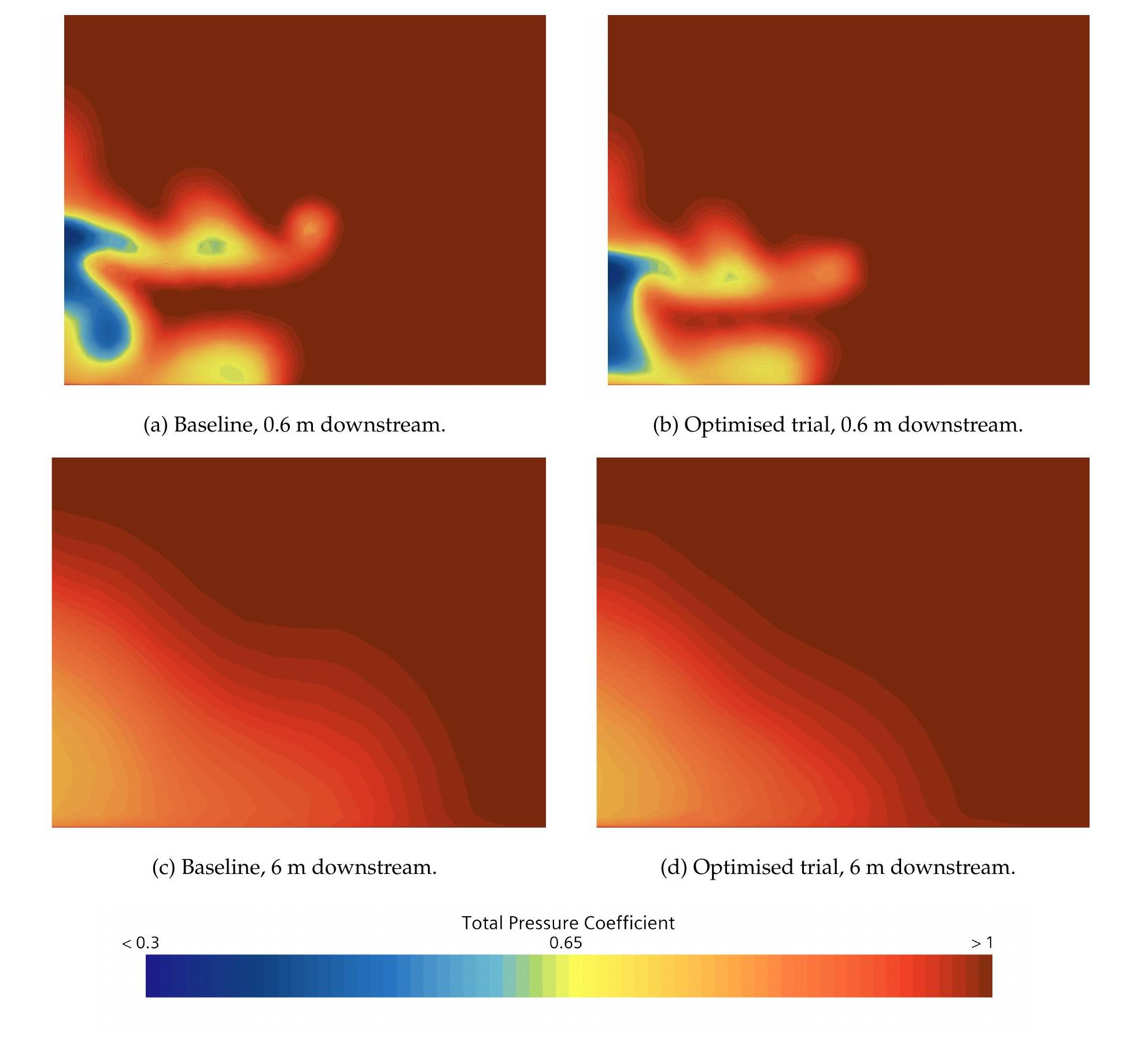
Total-pressure coefficient wake contours comparing baseline and optimised trial

The optimisation reduced predicted daily energy losses by 37.6%, with most improvement achieved within the first 40–50 trials. This highlighted the potential to reduce future computational cost through tighter stopping criteria.

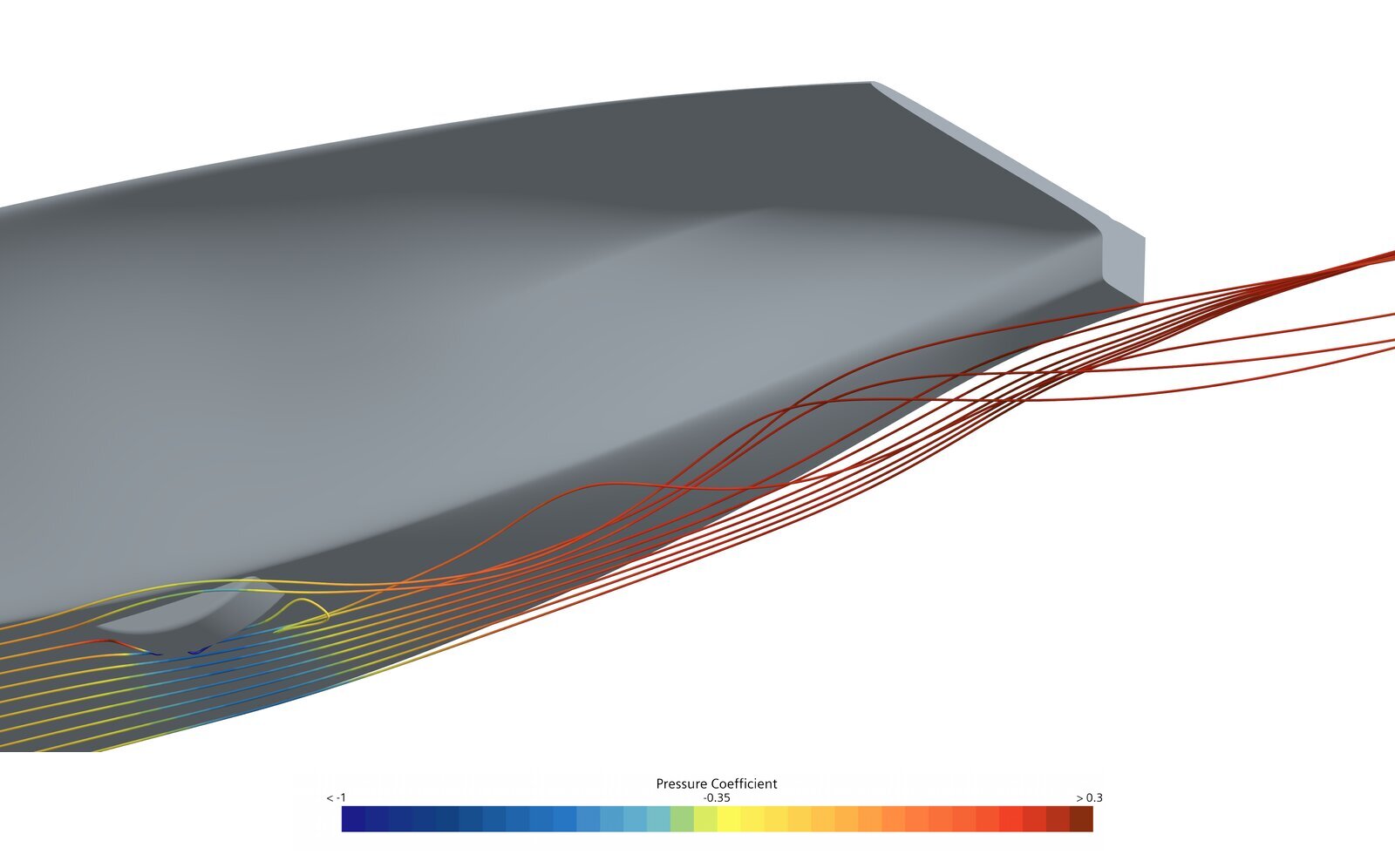
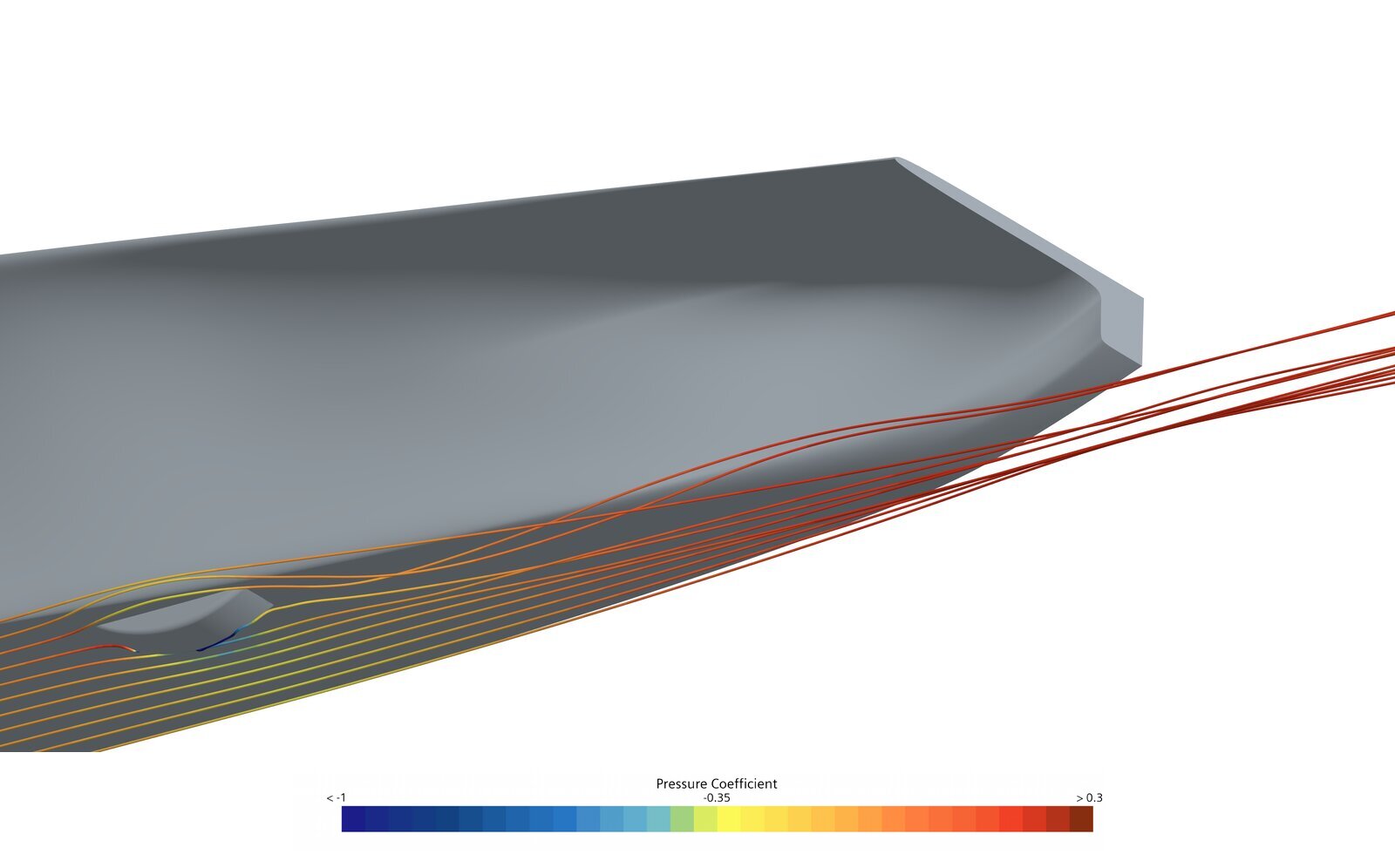
Rear-body streamline visualisation of the baseline design showing earlier flow separation Rear-body streamline visualisation of the optimised design showing delayed separation and a reduced wake

The optimiser focused changes on the rear body, improving pressure recovery, delaying separation and reducing wake size, while maintaining maximum solar collection area.

The final design remains a candidate rather than a race-ready geometry, but the resulting CAD–CFD–HPC optimisation pipeline provides EKKO with a reusable framework for future aerodynamic studies.

Tools & Methods

STAR-CCM+ SolidWorks Python Meta Ax SLURM / HPC SSH & SCP automation Bayesian optimisation Parametric CAD